Full transparency up front — I shoot a Seestar S30 Pro, not a Vaonis rig, so neither of these is a hands-on review. But "Pro vs. II" is the natural next question after the Vespera II deep dive I did a few weeks back, especially now that Vaonis has a proper Pro-tier scope on the market. The Vespera Pro 2 runs $2,990. The Vespera II runs $1,590. That's not quite literally double, but it's close enough that the real question is simple: does the extra ~$1,400 buy you a meaningfully better instrument, or just a fancier badge? I pulled both listings straight from Amazon and lined up what you actually get for the money.
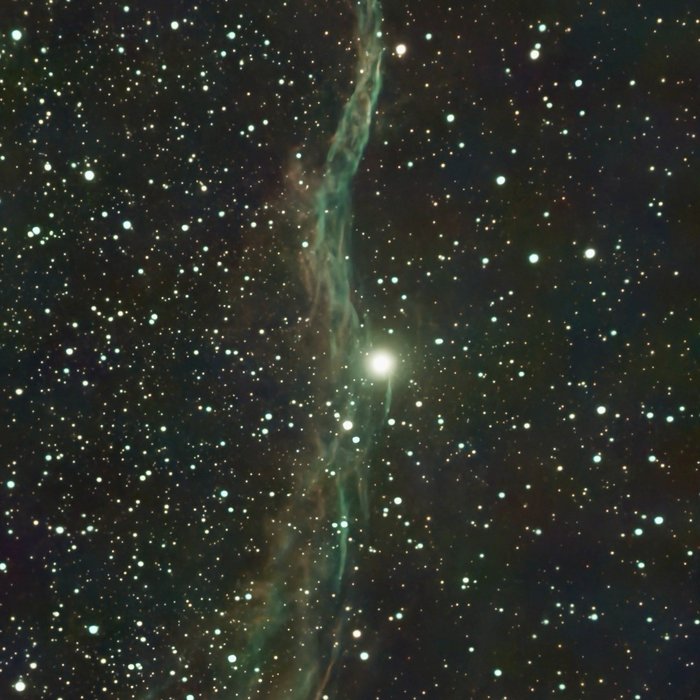
1. Spec-for-Spec Comparison 📸
| Spec | Vespera II | Vespera Pro 2 |
|---|---|---|
| Price | $1,590 | $2,990 |
| Sensor | 8.3MP (up to 32MP with CovalENS mosaic) | 12.5MP square sensor (Sony IMX676), 1.6 arcsec/pixel, limiting magnitude 16 |
| Optics | 50mm aperture, 250mm focal length | 50mm aperture, flat-field apochromatic quadruplet with stray-light baffles |
| Mosaic mode | CovalENS, up to 32MP | 50MP mosaic, 4.18° x 4.18° field, automatic multi-night stacking |
| Exposure control | Automatic (no published manual range) | Full manual — 1–30s exposure, 0–30 dB gain |
| File export | Not specified for RAW/FITS workflows | FITS/TIFF export, built for Pixinsight and Siril workflows |
| Signal processing | Standard live stacking | BalENS signal enhancement (boosts faint targets, removes sky gradients) + one-time master dark calibration |
| Battery life | 4 hours | 11 hours |
| Storage | Not specified | 225GB |
| Mount | Altazimuth, manual focus | Automated alt-azimuth, auto focus |
| Weight | Not specified ("ultra-light" per Vaonis) | 11 lb |
| Included accessories | Dust cover (tripod sold separately on the base listing) | Aluminium tripod and hard case included |
| App | Vaonis mobile app, Star Field Recognition auto-calibration | Singularity app (iOS/Android) with LumENS AI companion, up to 30 simultaneous projects |
| Warranty | Not listed on this Amazon listing | 5-year, made in France |
2. Where the Vespera Pro 2 Wins
This isn't a subtle upgrade — it's Vaonis building an actual astrophotography instrument instead of a point-and-shoot smart scope. The 12.5MP square sensor alone is a real jump over the II's 8.3MP, but the bigger story is what surrounds it: full manual exposure and gain control, FITS/TIFF export that plays nice with Pixinsight and Siril, and BalENS signal enhancement that's doing real work on faint targets and gradient removal rather than just stacking and calling it done. Battery life nearly triples too — 11 hours versus 4 — which matters a lot on a long dark-sky session where the II would need a recharge or a swap partway through the night. Throw in the included tripod and hard case, 225GB of onboard storage, and a 5-year warranty, and the Pro 2 is clearly positioned as the scope you buy once and grow into, not out of.
Vespera Pro 2 Pros
- 12.5MP sensor with meaningfully tighter resolution (1.6 arcsec/pixel) and a much fainter limiting magnitude
- Full manual exposure/gain control plus FITS/TIFF export for real post-processing workflows
- Nearly 3x the battery life of the Vespera II
- Tripod and hard case included, plus a 5-year warranty
Vespera Pro 2 Cons
- $1,400 more than the Vespera II
- Heavier at 11 lb — no longer the grab-and-go scope the II is
- Overkill if you're not planning to actually use manual controls or Pixinsight/Siril
3. Where the Vespera II Wins
The Vespera II's whole pitch is that it gets out of your way. Point it at the sky, let Vaonis's Star Field Recognition calibrate itself, and you're imaging — no manual gain curves, no exposure math, just an app and the stars. It's also genuinely portable in a way the Pro 2 isn't trying to be anymore, and at $1,590 it's still the more approachable entry point into Vaonis's ecosystem if $2,990 is simply outside the budget. If your goal is "beautiful images with minimum fuss," rather than a serious post-processing workflow, the II still does the core job the Pro 2 does, just with a smaller sensor and a shorter runtime.
Vespera II Pros
- $1,400 cheaper, and still a real 8.3MP sensor with mosaic capability up to 32MP
- Simpler, more automated experience — good fit if you don't want to touch manual settings
- Lighter and more travel-friendly
Vespera II Cons
- 4-hour battery life is a real limiter on longer sessions
- No published manual exposure/gain control or FITS export for advanced processing
- No tripod included on the base Amazon listing (tripod bundle runs $1,790)
4. So Which One Should You Actually Get? 🌌
You actually want to process your data
If Pixinsight or Siril workflows, manual exposure control, and squeezing out faint detail with BalENS matter to you, the extra $1,400 is buying real capability, not just a bigger number on the box.
You want a "point it and let it work" experience
The II still images beautifully on its own terms — you're trading raw capability and battery life for a lower price and a simpler workflow.
"The Vespera II still gets you a real image with zero fuss. The Pro 2 is for the person who wants to fight for that extra half-magnitude of faint detail — and is willing to pay $1,400 to get the tools to do it."