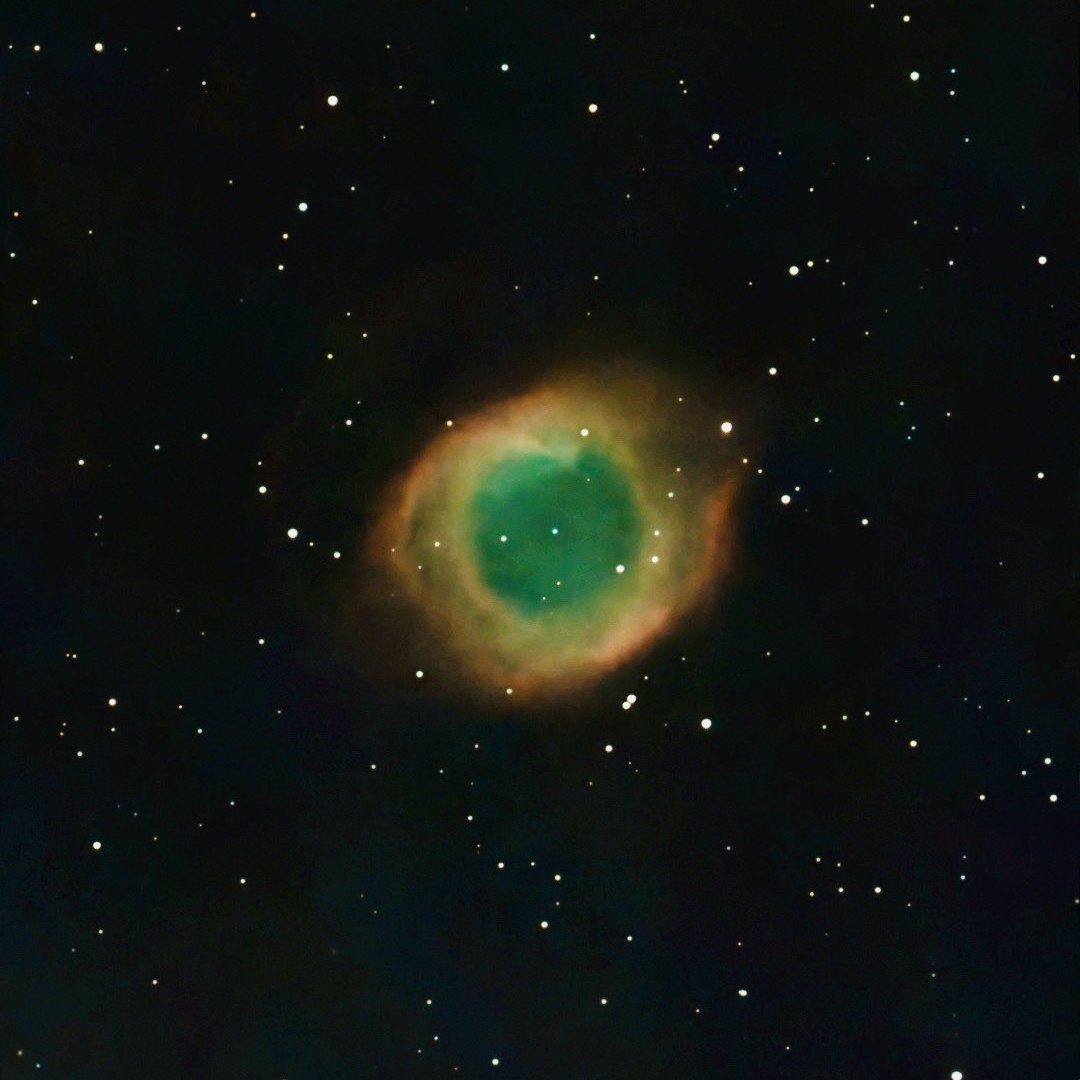
The first time I pulled up the Starfront live feed and watched my telescope go-to a target under skies darker than anywhere I've driven to in Georgia, it messed with my head a little. I caught the Eye of God (that's the Helix Nebula, for anyone who hadn't heard it called that) in one sitting, from my couch, while the scope itself sat under a roll-off roof in the middle of rural Texas.
With the dark Bortle skies I swapped my S50 for my S30 Pro to get some of the larger nebulas and also to shoot the Milky Way using the wide-angle lens. I've had an S50, borrowed an S30 for a short stretch, and have had an S30 Pro out there — all in the last year at Starfront — so this isn't a "read the FAQ and guess" review. I've got firsthand experience with the Seestar lineup running on their pier.
What Starfront Actually Is 🔭
Starfront Observatories is a remote-hosting facility outside Rockwood, Texas (about 90 minutes from Austin) that's turned into the largest remote observatory in the world by telescope count — something like 550+ scopes packed into a handful of roll-off-roof buildings on 40 acres. The pitch is simple: you either ship them your gear and they mount it on a pier for you, or they have Seestars already on-site that you can rent.
The sky quality is the real selling point. Starfront sits under Bortle 1 skies, with customers regularly logging SQM readings of 21–22 mag/arcsec². For context, that's about as dark as skies get in the continental US — multiple classes darker than anything most of us get without a serious drive. They also average 220–250 clear nights a year, which is amazing if you're used to Southeast humidity and cloud cover.
They're staffed 24/7, the buildings are built to survive rough weather, and there's an actual community behind it — 900+ customers and an active Discord where people collaborate on mosaics and compare captures. It's not just a server farm for telescopes; people hang out and share tips in Discord to help get you going.
How the Pier Tiers Work
If you're shipping your own gear, pricing is based on a monthly pier rental, sized to your setup. Here's how it breaks down (current pricing, pulled straight from Starfront's site):
| Tier | Monthly Price | Fits |
|---|---|---|
| Seestar Bar | From $99/mo | Seestar-class smart telescopes |
| Mini | From $149/mo | Small refractors / turnkey systems |
| Lite | From $199/mo | Up to a 4" refractor or 10" reflector |
| Standard | From $299/mo | Up to a 5" refractor or 14" reflector |
| Heavy | From $399/mo | Up to a 6" refractor or 17" reflector |
A refundable deposit locks in your spot and doubles as the install fee — their team unboxes your gear, mounts it, polar aligns it, and gets you imaging before the monthly billing even kicks in. If you want to run two scopes side by side or piggybacked, it's a flat +$100/month rather than a second install fee.
Renting a Seestar Instead of Shipping Your Own
This is the part I think is actually the most interesting for this site's readers, because it sidesteps the whole "do I trust my $500 telescope to freight carriers" question. Starfront rents out Seestar smart telescopes already installed on-site — you pay $1 to reserve one (billing only starts once you're actually connected and imaging), download the same Seestar app you'd use at home, and they email you login credentials to connect to your assigned scope. From there it works exactly like your own Seestar, except it's sitting under Bortle 1 skies instead of your backyard.
What You Need to Send (and What to Leave Home)
If you do go the "ship my own gear" route, Starfront provides the pier, the pier adapter, an ethernet drop, and AC power. Everything else — telescope, mount, camera, guide scope, cables, power supplies — is on you. A few things worth calling out from their shipping guide:
They specifically ask you to include a 30-ft ethernet cable with your shipment (or buy one from them on-site). If you're prepping a shipment, grabbing one ahead of time is probably going to be cheaper than paying what's charged for one in a pinch.
They also flag that if you're sending a Seestar-tier setup, having a proper hard case makes shipping dramatically safer — foam padding around the unit matters a lot more than a cardboard box and bubble wrap when it's getting tossed around by a freight carrier for two days. And since they don't store your box afterward (you have to prepay a return label if you want your case back), a case you're fine leaving on standby at home works better than your only travel case.
They're also firm about NOT sending tripods, tripod flanges, or pier extensions — those stay home, since the pier itself replaces them. And if you're sending a GEM-style mount, don't forget the actual mount bolts; missing bolts are apparently one of the most common reasons installs get delayed.
"You don't need a truck full of gear to shoot Bortle 1 skies anymore — you just need a login and a clear-night notification."
Rent a Seestar for $1
No shipping, no gear ownership. Reserve a slot and see what Bortle 1 skies actually do for your images.
Reserve a Seestar Bar pier ($99/mo)
Ship your own Seestar and get unlimited clear-night access instead of paying per trip to a dark site.
Standard or Heavy pier ($299–399/mo)
For refractors and reflectors that have outgrown what your backyard skies can ever show you.
Is It Worth It for a Backyard Smart Scope Shooter?
Here's my honest take: if you already own a Seestar or DWARF and are happy with backyard results, you don't need this. But if you've hit the wall on what Bortle 6-7 skies will ever let you capture — and I hit that wall constantly shooting from home — renting a Seestar slot for a month is a genuinely cheap way to see what your gear is capable of under real dark sky. $99 for a month of Bortle 1 imaging is less than most people spend on a single dark-sky camping trip once you count gas, a campsite, and the inevitable cloud-out.
For anyone with a bigger rig gathering dust because you can't get to truly dark skies often enough to justify owning it, the math shifts even more in Starfront's favor — you're paying $150–400/month for unlimited clear-night access instead of two or three trips a year.
My Take 🌌
I've been very happy with the setup I have at Starfront and the support I've gotten. I use the community Discord regularly to see what others on the Seestar Bar are shooting and pick up their recommendations. Right now I've got the Seestar S30 Pro out there, but at some point I may swap that out again as I try different targets.