Short answer: not really, and I want to be upfront about that before you spend a clear night in mid-August pointed at the wrong tool for the job. I said in my August targets rundown that I might try some wide-angle shots of the Perseids with the S30 Pro, and that it'd probably be "hit or miss." Since then I've actually dug into why, and the answer is more interesting than just "it doesn't work" — there's a real reason smart scopes and meteor showers are a bad match, there's one narrow thing the S30 Pro can still do during a shower, and there's a much better way to actually watch and shoot one. Let's get into it.
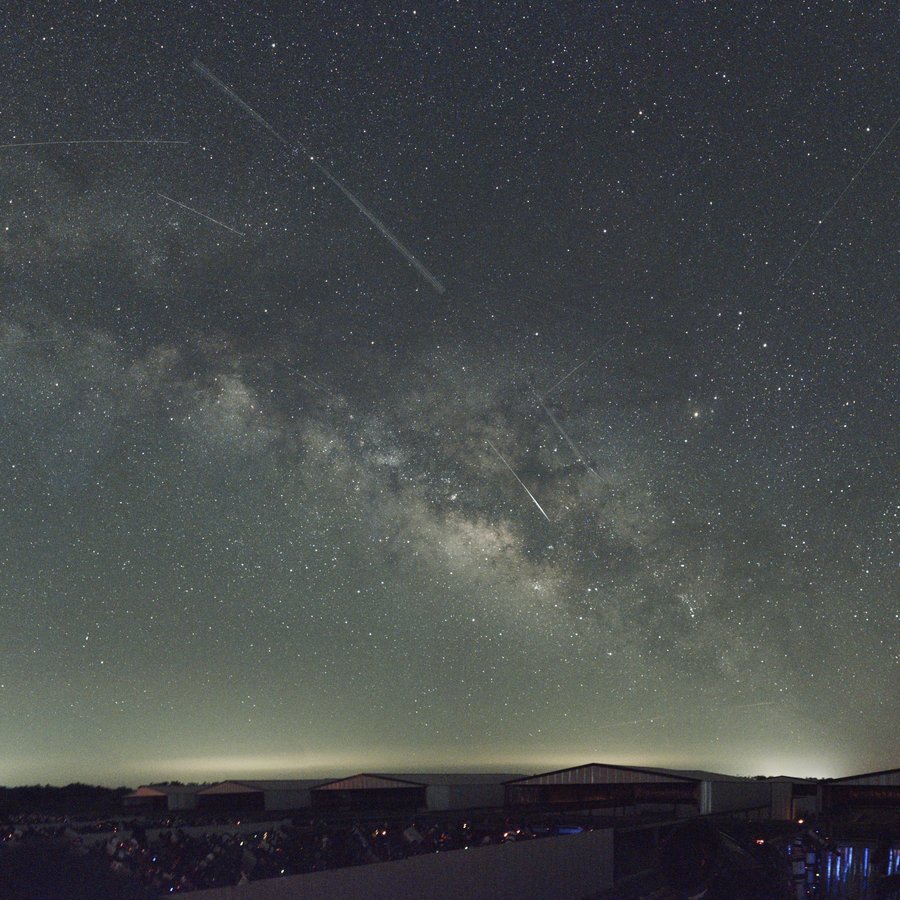
Why Smart Scopes and Meteor Showers Don't Mix 🔭
Every smart telescope on the market — Seestar, DWARF, Vespera, Origin, all of them — is built to do the opposite of what you need for meteors. They're designed to zoom way in on a small patch of sky (a nebula, a galaxy, a cluster) and stack dozens or hundreds of exposures over many minutes to pull out faint detail. The S30 Pro's field of view is a small slice of the sky, maybe a couple degrees across depending on the target.
A meteor can streak across 30, 60, even 90 degrees of sky in under a second. The odds that a meteor happens to cross that tiny two-degree window your smart scope is pointed at, during the handful of seconds it's actually integrating that frame, are genuinely low. You could run the S30 Pro all night pointed at one spot and easily catch nothing, while somebody lying on a blanket next to you sees a dozen fireballs with their bare eyes.
That's the core problem, and it's just physics — not a software limitation ZWO or DWARFLAB could patch their way out of.
What the S30 Pro Can Actually Still Do
I don't want to be all doom and gloom here, because there's a narrow lane where a smart scope is still useful during a meteor shower — it's just not "capturing meteors" directly.
If your scope has a live/timelapse or all-sky style recording mode, running it wide and unattended for a couple hours during the shower's peak is basically a lottery ticket: cheap to buy, unlikely to hit, but free money if it does. I plan to try exactly this during the Perseids peak — set the S30 Pro up on a wide framing, let it run, and see if I get lucky with a bright fireball crossing the frame. I haven't done this yet, so I can't tell you it'll work — just that it's worth a shot since you're not giving anything up by trying it.
The other honest use for your smart scope on a meteor shower night: keep doing what it's actually good at. Point it at a DSO target that's up and cooperating — I've got Sagittarius nebulae (M8, M20) and Cygnus targets like the Ring Nebula still well placed in mid-August per my last targets post — and let it stack in the background while you watch the meteors yourself. You get two things out of one night instead of babysitting a scope that isn't going to catch what you're actually there for.
The Right Way to Watch (and Shoot) a Meteor Shower 🌌
This is the part that actually matters. If you want to experience the Perseids — or any meteor shower — the gear that helps isn't a telescope, smart or otherwise. It's:
A wide-open view of the sky. You want as much horizon-to-horizon coverage as you can get, away from trees and buildings blocking your view. A dark-sky site helps a lot here, but even a backyard with a clear view up will show you the brighter meteors.
Comfort for a long sit. Meteor watching is a patience game — you're not "aiming" at anything, you're lying back and letting your eyes adjust while you wait. A chair or blanket that lets you look straight up without your neck cramping in twenty minutes makes a real difference in how long you'll actually stay out there.
A red light, not your phone flashlight. Every time you check your phone at full brightness, you reset your night vision and lose several minutes of sensitivity to faint meteors. A dim red light lets you see what you're doing (finding your drink, checking a star chart) without blowing out your adapted eyes.
If you want to actually photograph meteors rather than a DSO, that's a wide-angle camera or phone on a stable tripod, pointed at a broad swath of sky, taking a continuous sequence of long exposures for the length of the shower — completely different gear and workflow than anything a smart telescope does. That's a topic for its own post down the road; I haven't built out that workflow myself yet.
Meteor Shower Approaches at a Glance
| Approach | What It's Good For | What It Misses |
|---|---|---|
| Smart scope (S30 Pro, etc.) on a DSO | Stacking a nebula/cluster while the shower happens overhead | Won't catch meteors — field of view is too narrow |
| Smart scope, wide/timelapse mode, unattended | Small chance of catching a bright fireball on camera | Low odds; not built for this, so treat it as a bonus, not a plan |
| Naked eye, wide-open sky, reclined and comfortable | The actual meteor-watching experience — this is the real answer | No photo record unless you're also running a separate wide-angle camera |
| Wide-angle camera/phone on a tripod, long exposures | A real shot at photographing meteors | Separate gear and workflow from a smart telescope; more setup |
"A smart scope is the wrong tool for a meteor shower, and that's fine — the right answer is a blanket, a dark sky, and your own eyes."
Go outside and look up
No gear required. Give your eyes 20-30 minutes to adjust and let the sky do the work.
Let it work a DSO in the background
Point it at a Sagittarius or Cygnus target and let it stack while you watch the meteors yourself.
Try a wide/timelapse mode as a bonus
Low odds, but it costs you nothing to let the scope run wide and unattended during the peak.
Perseids 2026 — When to Actually Watch
Quick reminder from the August targets post since this is the shower worth planning around: the Perseids peak on the night of August 12 into the morning of August 13, 2026, and the moon isn't a problem this year — no interfering moonlight, so under a genuinely dark sky you could see up to 100 meteors an hour. That's about a week from today. If you're going to build a night around this, that's the one to circle.
Gear That Actually Helps on a Meteor Shower Night
Full transparency up front, same as I've said about filters and dew heaters before: I haven't personally run either of these two yet, so treat this as spec-and-review-based rather than hands-on.
Celestron Night Vision Red LED Headlamp — this is the obvious pick for a meteor shower night specifically because it's a real astronomy brand doing a straightforward job: a hands-free red light that preserves your night vision so you're not blowing out your eyes checking a star chart or finding your water bottle. Up to 100-hour battery life and an adjustable beam angle. This is exactly the kind of "cheap, boring, actually useful" gear that makes a multi-hour meteor watch more comfortable.
VEVOR 2-in-1 Reclining Camping Chair with Footrest — meteor watching is a lying-back activity, not a sitting-up one, and a regular camp chair has you craning your neck at the sky within twenty minutes. This one reclines to four positions with a footrest, which is the actual feature that matters here — you want to be nearly flat, looking straight up, comfortably, for as long as you can stand the bugs and the dew.