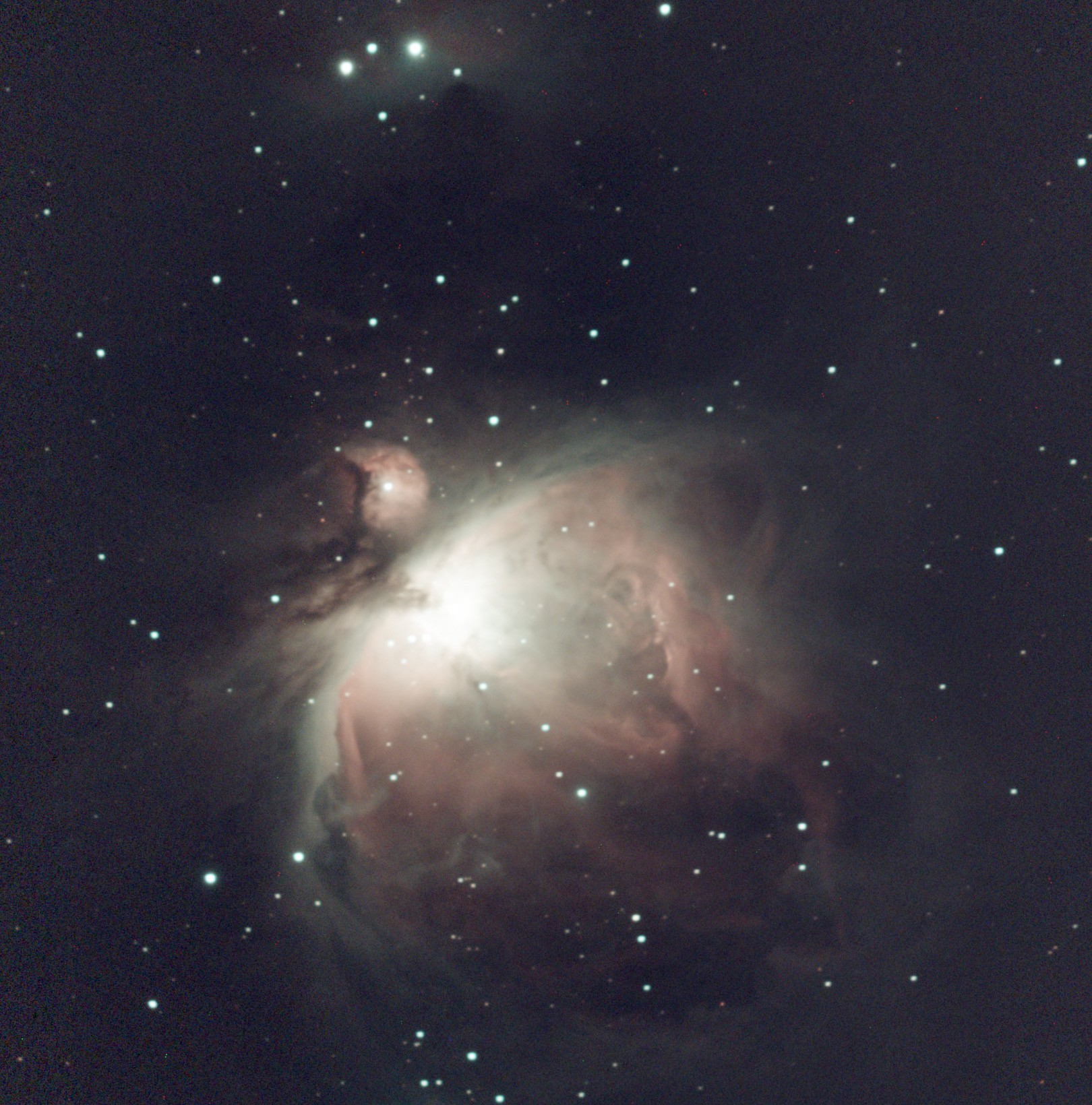
I want to tell you about the night astrophotography stopped being frustrating.
Before my Seestar S50, I spent a long time wrestling with traditional telescopes: polar alignment, star alignment, and a lot of nights that ended with nothing to show for it. I knew there was a ton to see up there. I just couldn't get the right equipment to show it to me.
The first night with the S50, I was bouncing between a couple of other targets when I pulled up the Orion Nebula in the catalog and started imaging. Within two or three subs, I was blown away. I laughed, and honestly, I teared up a little. After all that frustration, there it was.
That's why M42 is the target I point every beginner to first. It's bright, it's forgiving, and it gives you a real result fast. Below is how to find it, how to set your scope up for it, how long to stack, and the mistakes that trip up almost everyone.
Why M42 Is the Target Every Smart Scope Owner Starts With 🔭
That first-night reaction wasn't luck. It's the target.
M42 sits in Orion's Sword, just below the three stars of Orion's Belt, which makes it one of the easiest deep-sky objects to find even by eye. With a smart scope you don't even need that, because the catalog and plate-solving do the finding for you. What makes M42 special is how bright it is. At magnitude 4 it's visible to the naked eye under reasonably dark skies, and it's one of the few nebulae that doesn't need a pristine Bortle 1–2 sky to give you a real image.
That brightness is the whole reason it's a good beginner target. A lot of deep-sky objects need hours of stacked exposure before they look like anything more than noise. M42 shows real structure, the greenish core and the wings of nebulosity fanning out, in a fraction of that time. You get a confidence win fast, which matters a lot when you're still wondering whether you're doing any of this right. I know that feeling well.
When You Can Actually See It
Quick honesty check before you run outside tonight: it's early October, and Orion is a winter constellation. Right now it's mostly a pre-dawn target, low in the eastern sky in the hours before sunrise. If you're willing to get up early, it works, but you'll have a shorter window before morning twilight washes things out.
The good news is that the real season is close. By late October and into November, Orion is rising at a reasonable evening hour, and from December through February it dominates the southern sky for most of the night. That's the stretch to plan a proper session around. Get your gear sorted now so you're ready when it's up.
Setting Up Your Seestar for M42
The setup here is about as low-friction as this hobby gets, which is a big part of the appeal, especially if you're coming from traditional gear like I was.
Let the scope acclimate first. If it's been sitting in a warm house, bring it outside 10–15 minutes before you start. A scope that's fighting a temperature mismatch gives you softer stars.
Level it, then let the app do the finding. Search "M42" or "Orion Nebula" in the target list. On the Seestar app it's under the Nebulae category, and GoTo and plate-solving take it from there. No star alignment, no polar alignment. This is exactly what I spent so long fighting with traditional scopes.
Expect the core to blow out before the wings show up. This is the most common surprise for first-timers. M42's core, the Trapezium region where four young stars light up the surrounding gas, is much brighter than the faint outer nebulosity, so a single exposure length can't capture both well. Longer exposures reveal gorgeous detail in the wings but turn the core into a white blob. Shorter exposures keep the Trapezium's structure but leave the fainter areas thin. Some smart scopes offer an HDR or blended-exposure mode built for exactly this problem, so check whether yours does.
Don't over-frame it. M42 is compact enough that your scope's default framing usually catches the whole nebula with room to spare. You don't need a mosaic like you would for something big such as the Rosette or the Veil.
How Long Do You Actually Need to Stack?
This is the question I get asked most about M42, and the answer is: less than you think, but more helps a lot.
| Stack Time | What You'll Actually See |
|---|---|
| 2–3 subs | Enough to make you laugh (and maybe tear up). The nebula is already unmistakable on screen. |
| 5–10 minutes | A recognizable nebula shape and the bright core. Enough to confirm you're on target and framed correctly. |
| 20–30 minutes | A solid, shareable image with clear wings of nebulosity and decent color. Genuinely "post it" quality on M42. |
| 1–2 hours | Cleaner detail in the fainter outer regions, smoother gradients, less background noise. |
| 3+ hours | Extended nebulosity further out, plus a decent shot at the fainter Running Man Nebula (NGC 1977) just north of M42. |
The practical takeaway: if you only have 20 minutes before clouds roll in or bedtime hits, M42 is one of the only targets where that's enough for something worth keeping. If you have a full clear night, letting it run keeps paying off, just without the urgency a fainter target demands.
Common Beginner Mistakes Capturing M42 📸
Stopping the first time it "looks done." Because M42 shows results so fast, it's tempting to call it after 10 minutes. If you have the time, let it keep integrating. The difference between 10 minutes and an hour is real, even on a bright target.
Not accounting for dew. Orion season runs through the colder months, and cold, clear nights are exactly when dew forms fastest on an exposed lens. A fogged lens partway through a stack ruins the back half of your session, and you might not notice until you're processing the next morning.
Ignoring the core/wings tradeoff. If your first image has a blown-out white blob where the Trapezium should be, that's not a bug. It's single-exposure imaging meeting a very bright target. Check for an HDR or blended-exposure mode before assuming something's wrong with your scope.
Rushing setup because "it's just M42." It really is more forgiving than most targets, but skipping leveling or the acclimation period still costs you image quality, even here.
"M42 is the one deep-sky target where 'good enough for tonight' and 'actually worth keeping' show up in the same twenty minutes."
Which Setup Fits You
Just point at M42 and let it run
Search it in your app, let the scope plate-solve, and give it 20–30 minutes before you judge the result. This is the one target where that's genuinely enough.
Get a dew shield
Cold, clear nights are prime dew-forming conditions. A simple dew shield keeps your lens clear for the whole session instead of fogging out halfway through.
Bring a small power bank
You don't need anything huge. A compact 10,000mAh bank buys you extra time for a long stack on M42 or a second target, and it's cheap insurance on a cold night.
Gear for This One
Same transparency as always: I shoot with a Seestar S50, and that's what I captured my first M42 with. Amazon doesn't carry the plain S50, so the scope pick below is the S30 Pro, the closest current listing. The dew shield and power bank are picks based on compatibility, specs, and reviews rather than my own long-term testing.
Your Turn
If astrophotography has been frustrating you, I get it. I was right there. Point your scope at M42 on the first clear night it's up and give it a few subs. Don't be surprised if you laugh. I won't tell anyone if you tear up a little.