For the first few months I owned a Seestar, I never touched the mode setting. Point, focus, stack, done — that's Alt-Az mode, and it's genuinely great for grab-and-go sessions. Then I started noticing my longer integrations on faint targets were topping out earlier than I expected, and a little digging led me to the thing that actually explains it: field rotation. Alt-Az mounts track a target by moving in altitude and azimuth simultaneously, and that means the sky is quietly rotating around your target the whole time you're imaging it. Past a certain single-exposure length, that rotation starts smearing stars into little arcs instead of points. EQ mode fixes that by tilting the whole mount to match Earth's axis, so it only has to track on one axis — and that's the difference between capping out around 10 second subs and comfortably running longer exposures.
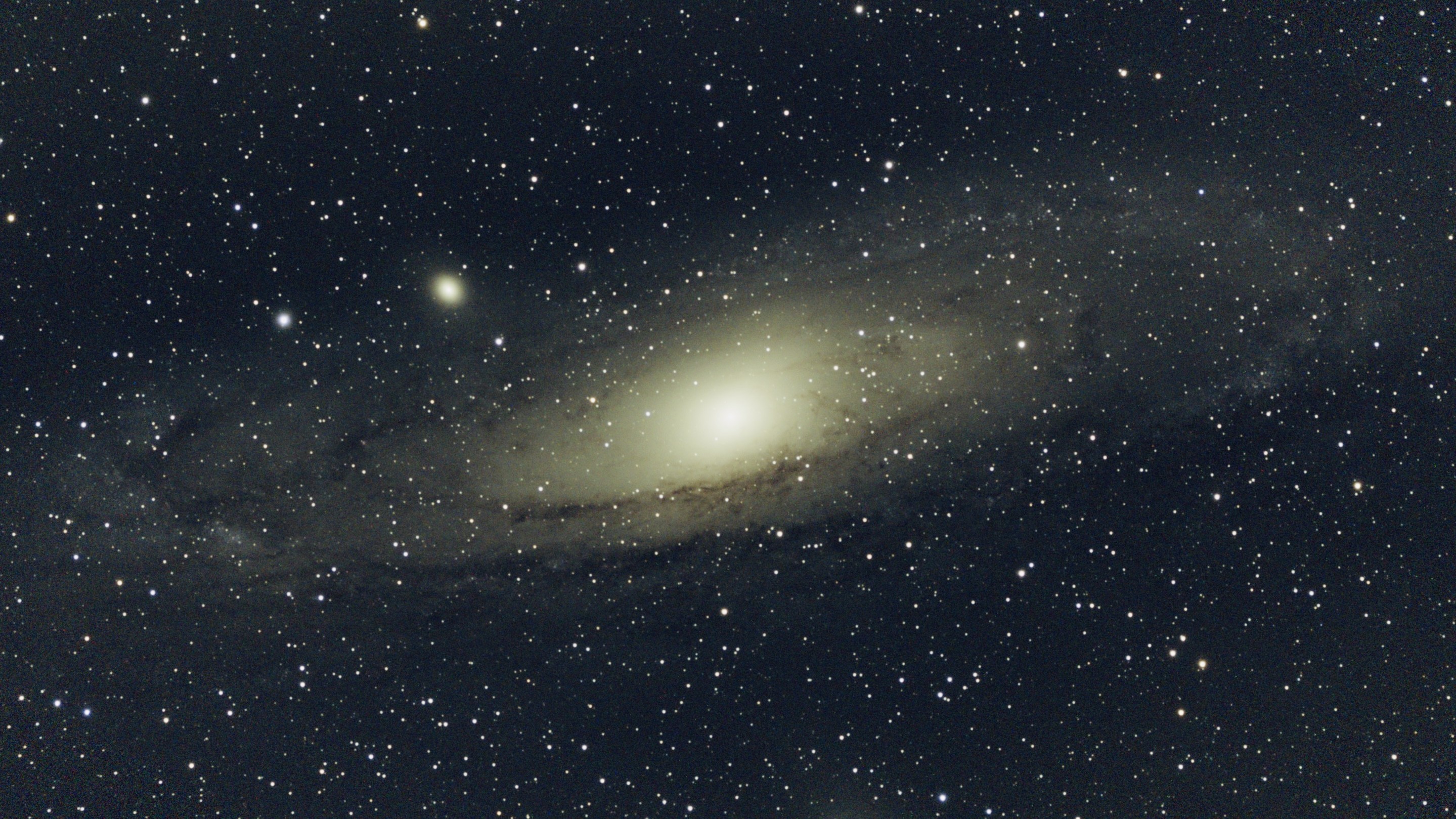
I run EQ mode on my S50 in the Atlanta backyard using a Sky-Watcher equatorial wedge under it, and it's the single upgrade that's done the most for my faint deep-sky shots from a Bortle 8 driveway. This is the honest, from-my-own-setup rundown of what EQ mode actually buys you, what it costs you in setup time, and exactly what gear I'd point you toward if you want to try it.
1. What Alt-Az Mode Is Actually Limiting
Every smart scope — Seestar, DWARF, Vespera — ships in Alt-Az mode by default because it's simpler. No polar alignment, no leveling fuss, just set it on a tripod and go. The tradeoff is that field rotation caps how long any single exposure can run before stars start trailing, especially on targets higher in the sky near zenith, where rotation happens fastest. The app compensates by taking a lot of short exposures and stacking them — which works, but it means more read noise accumulating across more frames to hit the same total integration time.
2. What EQ Mode Actually Changes
Tilt the mount to your latitude and point it at the celestial pole, and the scope now only has to rotate around one axis to track the sky — the same way it actually moves. Field rotation disappears, and your single-exposure ceiling jumps way up. That's it, that's the whole trick. It's not a new sensor or new optics, it's just letting the mount work the way equatorial mounts have worked for a century. Longer subs mean fewer total frames for the same integration time, less accumulated read noise, and a real bump in signal-to-noise on faint stuff like nebulae and galaxies.
3. What You Actually Need to Run It 🌌
For the S50 or S30/S30 Pro, EQ mode isn't a firmware toggle you flip and go — you need a wedge to physically tilt the mount. I use the Sky-Watcher S20530 Star Adventurer Latitude (EQ) Base under my S50, and it's held up well through a full season of backyard sessions. Heads up if you go this route: the dovetail tightening knob on this base can interfere with the Seestar's rotating body — it's a common enough issue that it shows up across a bunch of the Amazon reviews, not just something I ran into. I swapped in Sky-Watcher's own S20550 Ball Head Adapter to get clearance, and that solved it cleanly.
If you're running an S30 or S30 Pro instead of the S50, worth knowing that ZWO sells their own TC20 Carbon Fiber Tripod, built specifically to pair with EQ mode on those two scopes (the S50 already ships with a tripod that's fine for this). I haven't personally run the TC20 — my S30 Pro lives pier-hosted at Starfront where the mounting setup is already handled — so take that one as a spec-sheet recommendation rather than a hands-on review, but it's ZWO's own purpose-built answer to the stability question.
Budget the extra setup time too. Alt-Az is "set it on a table and go." EQ mode means leveling the wedge, dialing in your latitude, and rough-aligning to the pole before you start a session. It's a few extra minutes, not an ordeal, but it's not nothing on a night where clouds are already rolling in.
Alt-Az Mode vs. EQ Mode
| Alt-Az Mode (default) | EQ Mode | |
|---|---|---|
| Setup | Level the tripod and go | Level, set latitude, rough polar align |
| Extra gear needed | None — works out of the box | EQ wedge/base, possibly a ball head adapter |
| Max practical single exposure | Roughly 10 sec before rotation blur | 30 sec and up with a decent alignment |
| Field rotation | Present, worse near zenith | Eliminated |
| Noise per unit of integration time | Higher (more frames stacked) | Lower (fewer, longer frames) |
| Best for | Quick backyard sessions, planetary/lunar, casual targets | Faint nebulae and galaxies, longer integrations |
| Portability | Best-in-class | Bulkier, more moving parts |
"EQ mode doesn't make your Seestar a better telescope. It makes each individual exposure count for more — and on faint, diffuse targets, that's the whole ballgame."
Should You Actually Bother?
If you're mostly shooting bright, forgiving targets — the Moon, planets, the brighter Messier objects — honestly, don't sweat it. Alt-Az mode's short subs stack up fine and you save yourself the setup time. Where EQ mode earns its keep is on faint, low-surface-brightness stuff: dim nebulae, galaxies, anything where you're fighting for signal against a Bortle 8 sky like mine. That's exactly the target list where longer subs make a visible difference in the final stack.
You're chasing faint deep-sky targets
Fewer, longer exposures beat piling up hundreds of short ones — especially shooting from a light-polluted backyard where every bit of signal-to-noise matters.
You mostly shoot bright targets
The Moon, planets, or bright Messier objects already stack up cleanly on short Alt-Az subs — or you just value grab-and-go simplicity over squeezing out more signal.
The EQ wedge itself
The Sky-Watcher EQ base is the actual piece of gear that unlocks EQ mode — nothing else on this list matters without it.